DISCLAIMER

All rights of photos and text reserved. Usage of photos or text from my blog on other websites or for any other purpose only with prior permission. If you want to use any material from my blog please contact me by email.
Showing posts with label E55L. Show all posts

Friday, May 8, 2015

The Headphone Amplifier 2

Hi!

Last month I showed the first headphone amp I ever built. That one was meant to be used with a preamplifier, hence it did not have input selector or volume control. This month I finished another version of that, this time with input selector switch and a volume attenuator at the input so sources can be connected directly to it.


It is based on the same circuit and component selection as the previous one, just with the selector added and a resistive ladder type volume control.


While the previous one had all the taps of the output transformers brought out to individual jacks, this only uses one of them to make room for the control switches.


Output tubes are triode wired E55L and the rectifier is the 6BY5.


Best regards

Thomas


Thursday, April 9, 2015

Tube of the Month : The E55L (revisited)

Hi!

Since I used the E55L in a headphone amp recently, this is a good opportunity to have a closer look at the tube again. The first tube of the month post about the E55L did not show any photos of the internals, so it is time to revisit it.


Technical details of the tube have already been covered in the first post. So this one will just show photos.

Philips Miniwatt E55L:


Amperex:


Another Amperex:


Telefunken:


Mullard:


For closer inspection of the internals I picked the Amperex with green letters. A close up before it is getting destroyed:


The glass removed:


Peeking into the side opening of the pate already gives an idea of the fine structures of the grids:


The top with the getter ring:


Side view:


A close up showing the pins going through the glass:


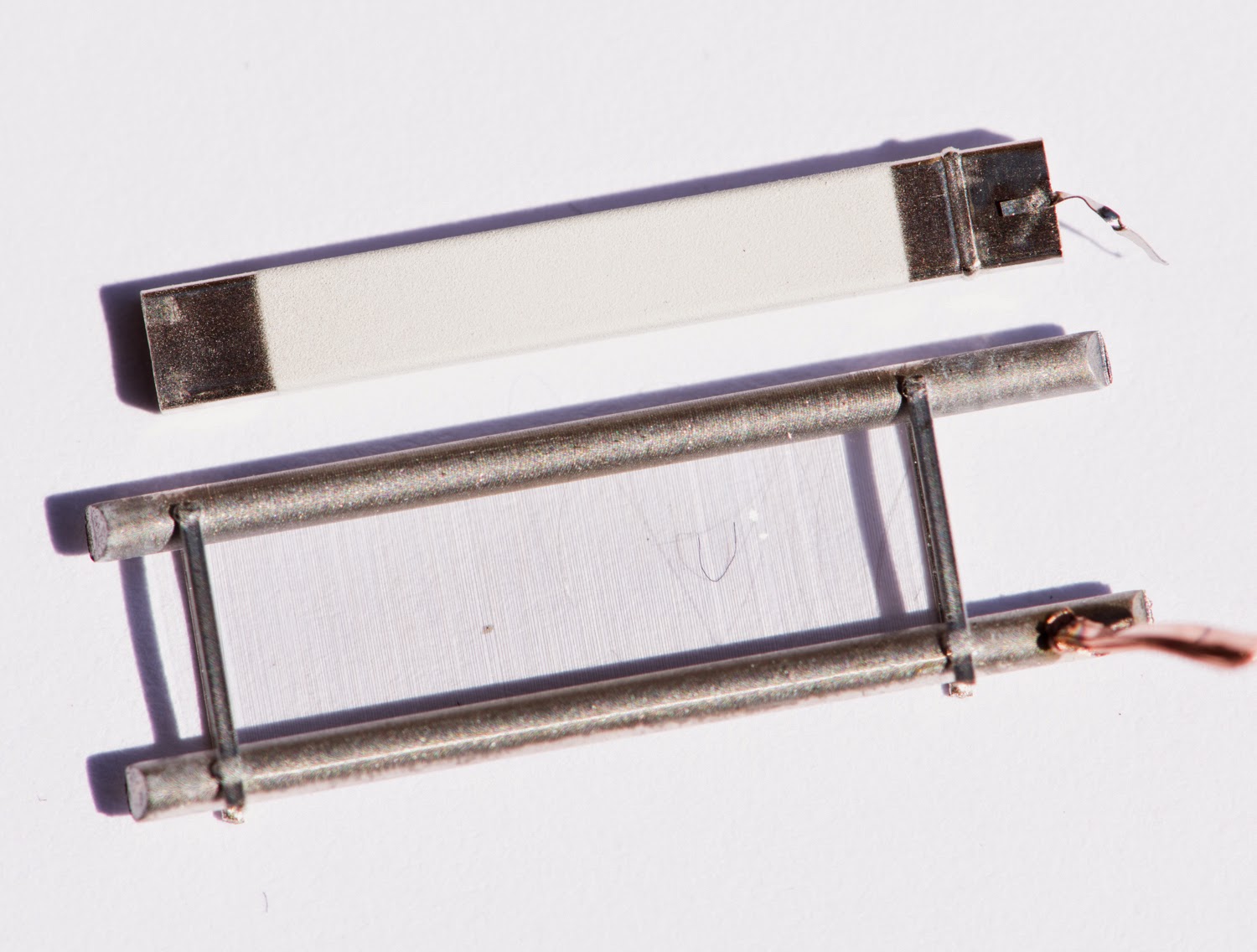
The plate removed from the system:


This leaves the remaining assembly exposed, cathode, control and screen grids and beam forming plate:


A close up to the rod which holds the screen grid:


The heater wire inside the cathode:


Heater wire partially pulled out:


Close up:


The heater:


Cathode and control grid:


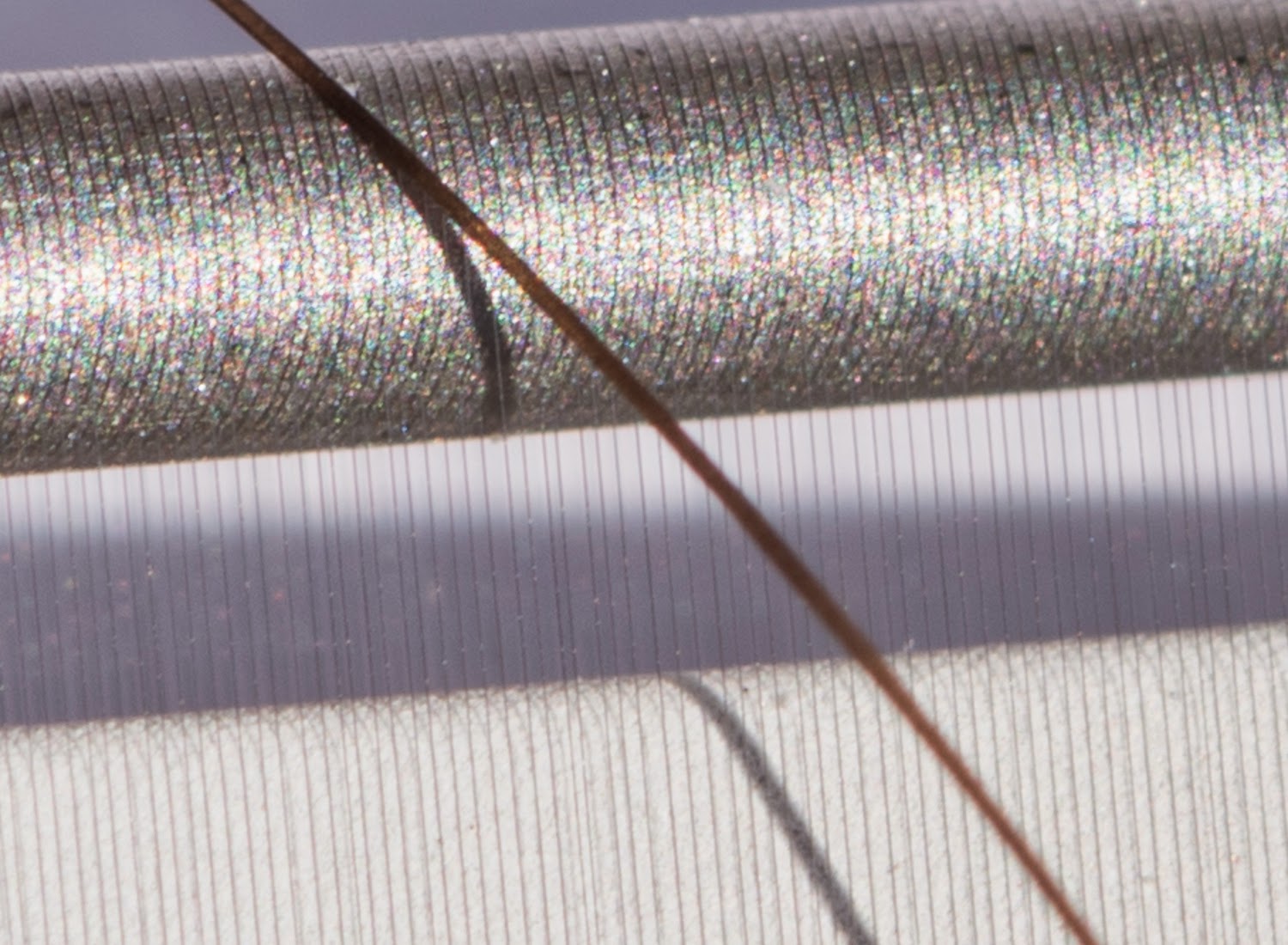
The control grid wires are extremely fine and barely visible:


A human hair in comparison:


A close up shows what a marvellous piece of engineering the control grid structure is:


Cathode and control grid separated:


More views of the grid:


And lastly a few photos of glowing EL55s:


Best regards

Thomas


Friday, April 3, 2015

The Headphone Amplifier

Hi!

In most cases my line preamplifiers can drive headphones without any problem. But certain headphones with 32 Ohms impedance are a too heavy load for a preamp. Typically they are too sensitive to be connected to a power amp, even if it is a flea power single ended one. So in such cases a dedicated headphone amp which acts as buffer after the preamp is the ticket.


This is how the E55L single ended headphone amp was born. It is meant to drive the Grado RS1 which is very sensitive (1mW for 96dB SPL) and has a 32 Ohms impedance.  The E55L triode connected delivers more than enough power for that and has just the right gain. So the amp can be kept rather simple with just a single E55L stage per channel.


The circuit follows my usual approach in power amps. Output transformers are Hashimoto. The E55L runs at a moderate 30mA. The power supply is tube rectified with a 6BY5 augmented with UF1007 diodes to create a full wave bridge. Several LC filter stages after rectification. This guarantees a hum free operation even with these sensitive headphones.


Top view:


There are 3 outputs connected to the 4, 8 and 16 Ohm taps of the output transformers. The headphones work on either of them. Selecting different output provides some additional gain control.


Just one tube per channel:


View from the back:


The E55Ls proved to be just right for this application.


Best regards

Thomas