DISCLAIMER

All rights of photos and text reserved. Usage of photos or text from my blog on other websites or for any other purpose only with prior permission. If you want to use any material from my blog please contact me by email.
Showing posts with label 1602. Show all posts

Wednesday, June 1, 2016

The Ultimate Line Preamplifier, Part 4

Hi!

Since I recently finished another one of my ultimate line preamplifiers, I though I share some thoughts again about it's sound.


Yes, it's quite unusual for me to write about sound, and to rave about my own creations, but this preamp is really special and keeps surprising me.


It shares the same circuit and component quality with the first ultimate line preamp I built. Only the inputs are set for different gains. While the first one had the input transformers wired for 0dB, +6dB and +12dB. This one has -6dB, 0 and +6dB to accommodate loud sources in the system it will be used in.

Silver transformers and chokes from the recent batch of silver goodies have been used. In total 14 pieces of silver wound goods!

And of course equipped with the 1602 variant of the 10Y triode.


There is a lot of scepticism around against silver transformers. Do they really make such a difference?  I am not a wire and cable nut and use the most modest interconnect and speaker cables you can think of. But silver simply works for me in transformers. I do use solid core silver wire for all the internal signal path of amps and preamps but that is more to calm the nervosa audiophila which could otherwise raise it's ugly head ;-) But in actual tests I do not hear big differences between different wires. Yes there are differences but they are not important to me as described in the post about my thoughts about wire. But silver transformers are an entirely different story.

Especially in this case where in addition the signal path is truly free of capacitors. Silver input transformers to tubes to silver output transformers to silver AVCs. Can't get much purer than that.


I already described my impressions in part 3 about this line stage. What I realised this time is the ability of this preamp to lift up an entire system even if the other components are of modest quality. Initial listening tests were done with a 7 year old build of my 6CB5A amplifier concept. The best implementation with Tango transformers but all copper and no DHTs. I used a ridiculously modest source. A vintage (more than 30 years old) Philips CD100 player, completely stock, no mods. All hooked up with cheap interconnects (single digit price range).

The improvements due to this line stage were easily audible from the next room! I was soldering on my workbench while the system was playing in the listening room with the door open. Subtle and sweet sounds swapped over from there and kept distracting me from soldering. This is when a change in a system really matters. When you hear it from the next room.


Then hooked up to my main system with the single ended EC8020 phono and the recently built stereo 300B amp or the 801A/211 monos, the strengths of this line stage became even more apparent.
Extremely life like voices and instruments. Cymbals are so nicely resolved and just swinging right there in the air. No trace of harshness even when the record is a bit roughly done. Still in this system the line stage was the only all silver component. Sadly I have to ship it to it's owner now. I need to build one for myself and I will pair it with a matching all silver variant of the differential EC8020 phono stage.


Stay tuned!

Best regards

Thomas

Sunday, February 7, 2016

The Ultimate Line Preamplifier, Part 3

Hi!

In part 2 about my ultimate statement in terms of line preamplification I already gave an extensive sound description. I usually do not write much about the sound of my amps and preamps since such impressions are rather subjective. Such rants as in the last post are quite unusual for me so I thought another post is due with some follow up.


When listening to a newly developed amp or preamp it is easy to get carried away, especially when the expectations are high as with such a silver laden component. Often the initial enthusiasm wears off after some time. But often also the opposite can be true and only after living with a component for some time it's true strength reveals itself.


So what do I think about the sound of this preamp after some time? In fact I found it even better than when I wrote the last post. The most notable strength is the extremely refined texture of sounds and the way it sculptures even the tiniest detail with ease.


Especially since I had the chance to listen to this preamp in the system of it's owner last week, I can confirm all the statements I made about it. Even though I listend to it in a system with very different speakers and sources, I could hear all the positive aspects of the line stage as I heard them in my own system.


Voices are unbelievably warm an natural. Very pleasing to listen to with excellent articulation.


I am very happy with the sound which I could achieve with this and another one is planned for my own system.


Once exposed to this kind of sound it is difficult to live without.


And of course the matching phono stage is in the planning as well.


And maybe towards the end of the year I will apply the same differential concept to a power amp. Stay tuned for reports about the progress on this.

Best regards

Thomas


Thursday, December 10, 2015

The Ultimate Line Preamplifier, Part 2

Hi!

The all silver differential line preamplifier which I announced in October, has been finished since a while. I finally found the time to take some photos and test it.


The unit got finished in a dark wood (smoked eucalyptus) with graphite grey metallic transformer covers.


As with all 10Y line stages the power supply is completely separate:


It houses separate choke filtered filament supplies for both channels and a choke filtered B+ supply using the well proven full wave bridge arrangement with 4 6AX4 TV Damper tubes.


The signal section is completely free of any capacitors.


There are 4 filament chokes under the transformer covers. Inside the chassis there are 14 (!) silver transformers and chokes.


Silver volume control AVCs, silver line output transformers, separate silver wound plate chokes for each tube and a separate pair of silver input transformers for each of the 3 inputs.


This line stage is equipped with a quad of 1602 tubes, a special low microphonic variant of the 10Y.


The big question now, was it worth the effort and expense?


Short answer: Yes absolutely!


When I was challenged with the task to build a line stage which out classes the silver 10Y line stage, I was skeptical if any significant advance in sound quality could be achieved. After all I am very happy with the base copper version of it and happily use one every day. The silver version puts some icing on the cake of that. What more could you wish?


I am normally hesitant to write about the sound of my creations. I have written a lot about the subjectivity of such sound descriptions and of course I am biased. Still I understand that you want some sound impressions.


This new preamp took me by surprise. I first listened to it with some regular 10Y tubes, not even carefully matched ones. I was shocked by the sheer realism which I heard. This preamp sounds incredibly warm. By that I don't mean a 'tubey' warm sound, but a very realistic and natural reproduction.


Today I plugged in a matched quad of the fabulous 1602 and got blown away. Each tone seems to be more textured than before. Each little detail is plainly audible. Yet the representation does not fall into pieces what can often happen with systems which try to be analytical. But everything stays integrated and is easy to listen to without any fatigue. New details pop up on well know records.


The single ended line stage is not really a slouch in terms of realism and resolution, it actually really excels in that and I was surprised to realise that even more is possible. All that combined with the incredible warmth. Normally I am not much into sound staging but I also noticed a added realism in that regard. Again a property in which the standard line stage is already extremely good. Especially with atmospheric electronic music this preamp seems to paint the tones into the room. Also the bass representation is wonderful. Each bass note is more present than before with all the detailing of the textures of the sounds.


The conversion from copper to silver has brought more improvement in the differential line stage than it did in the single ended version.


So this preamp deserves the title of my ultimate line preamplifier.


Please forgive the long rant which is not usually my style. But this preamp deserved it.


Of course this new preamp won't make the standard version obsolete. It comes at considerable cost after all.


As I have written before: The secret to achieving good sound is to be happy with what you can afford or simply to enjoy what you have.


But if budget is not an issue, I can only recommend to consider such a preamplifier. I am trying to imagine how it would sound in combination with a fully differential and all silver phono preamplifier, which I still have to build.


I will be able to enjoy this preamp for a little while before it will be shipped to it's new owner.


Best regards

Thomas

Sunday, October 4, 2015

The Ultimate Line Preamplifier

Hi!

Last year I was asked to build an ultimate line preamplifier which has the potential to even better the single ended 10Y preamp with silver transformers. But how to improve upon such a preamp which is pretty much maxed out already?


The single ended versions with silver use top notch transformers. So what is left to play with are the capacitors. But I think those ex military stock NOS paper in oil caps are extremely good and I prefer them stuff over the usual 'audiophile grade boutique caps'. So the idea came up to abandon all caps from the signal path and to go differential. A prototype version with copper transformers was built and proved to sound excellent.

But then the Elrog 300B came and with it the idea to use it in a line stage. Again a prototype with copper transformers was built first. For this a custom OPTVC was wound by Tribute. Again the sound was very good, but the 300Bs are a bit more microphonic than the 10Y and would require a more careful selection of tubes.

So finally the decision was made to go back to the differential concept and build it with the best possible parts, which means a whole bunch of silver:


Lundahl silver line output transformers and silver wound AVCs from Intactaudio. 3 Pairs of Lundahl LL7903Ag silver line input transformers will be wired for different step up ratios to provide the possibilities of different gain. Each of the 4 tubes has it's own plate choke which are also silver wound! So all parts which are involved with the signal path are silver wound. 14 transformers and chokes in total!

Of course for such a project only the finest tubes will be used. In this case a matched quad of the fabulous 1602, a special variant of the 10Y


So will this be the best line preamplifier in the world? There are many claims out there about the best this or the best that. This is highly subjective, especially in audio. No matter how much effort is spent, there might always be something better elsewhere. But based on my experience in audio and with tubes, parts and silver transformers, this will be the best I can currently think of. And of course I need to finish it first and give it a listen. Stay tuned!


Best regards

Thomas

Thursday, January 15, 2015

Tube of the Month : The 1602

Hi!

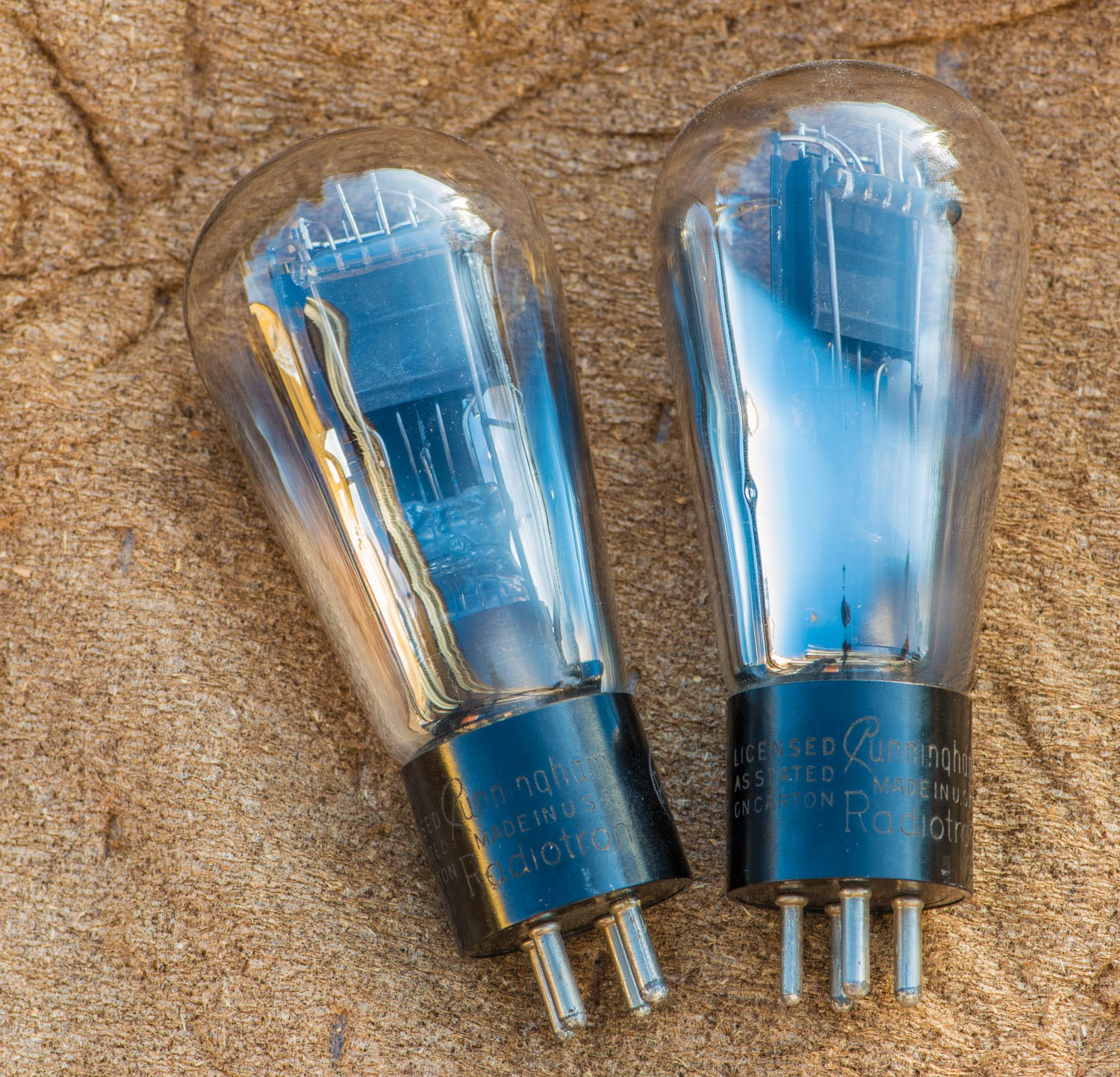
It is well known that I am very fond of the 10 and 10Y, as well as all derivatives of this family: UX210, VT25, 801, 801A and VT62. All these tubes have already been extensively covered on this blog. But there is one very special and rare variant which deserves it's own Tube of the Month post: The 1602:


The 1602 is a specially selected 10 for applications which require low microphonics. It was called '10 Special' before it received it's own number.

It shares all the technical parameters of the 10 or 10Y and of course has the same pinout. In my experience the regular 10 or 10Y are already quite reasonable in terms of microphonics and I use them regularly in line stages. Since the 1602 is even better in that aspect it is the perfect choice for preamps of course. I have no information about the intended application for which the 1602s got selected. If anybody has some more information about this, I would appreciate to know more. The tube was mentioned in the May 1936 issue of the All-Wave radio magazine. So I assume it was introduced around that time.

That magazine mentioned it's intended use in audio applications, which is not a surprise given the selection for low microphonics. Although I always had good results with 10Y tubes in line stages, where microphonics are critical, a tube which is even less sensitive is of course always welcome. It seems that the tubes have also been selected for electrical parameters. I can pick pretty much any two 1602 from my stash and they show perfectly identical plate curves on the curve tracer. This is of advantage for usage in differential circuits like my 10Y differential preamplifier. I am getting excellent results from this tube in preamps. It is not a different sound but the basic characteristics remain the same (which is expected) just with an even quieter background and perceived higher resolution. Don't try to hunt for this tube unless you are very patient and are willing to spend significantly more than is usual for a regular 10 or 10Y. I have been looking for these since well over 10 years and managed to acquire  only a few of them.

Apparently the 1602 was only offered by RCA and General Electric the latter under the designation GL1602:


Here a close up of the base:


The tubes are identical to regular 10 tubes from GE.


After the selection process they just got a paper sticker over the number 10. This can be seen here, the paper sticker has been peeled off from the left tube:


The 10 designation also is still visible when the tube is held against a light:


They came in very nice packaging. Oversized boxes with lots of padding material.


Beautiful orange/blue boxes


The GL-1602 with the filament lit up:


Here a RCA 1602 in globe shape:


The base:


The other side:


The globe tube from another angle:


Beautifully made with the glass arbor inside which aligns the electrodes.


Unfortunatly I only have one pair of the RCA 1602:


But they are in perfect condition with getter fully intact and matching plate curves.


Not sure if the 1602 was also offered by RCA in ST glass. I have only seen globes from RCA.


After I ended last year with a series of 3 Tube of the Month posts about some rather modern, easy to find and cheap compactron tubes, I thought I start the new year with something more exotic. I hope you enjoyed it.

Best regards

Thomas