
I haven't presented a Compactron tube since more than two years, so I pulled the 6FM7 from my stash as this months tube.

The 6FM7 is a dissimilar duo triode. This means it contains two triodes which have different parameters.
 In case of the 6FM7 this is a high mu triode as section 1 and a low mu high current triode as section 2. The pinout is shown on the left. The two triodes leave several of the 12 pins unused. The 6FM7 was developed as vertical deflection oscillator and amplifier. Of course it can be used for other purposes as well like many TV tubes. Such a combination of triodes has not been unusual and I already showed a dissimilar due triode with octal base, the 6GL7. The high mu section of the 6FM7 has an amplification factor of 66 with a plate resistance of 30 kOhms. This could be useful for applications needing a lot of gain like phono stages. Section 2 is a low mu triode with an amplification factor of only 5.5 with a low plate resistance of 920 Ohms. This could be used in line stage applications or even as output
 triode for a flea power amplifier. In such a use case the high mu section can be used as driver, enabling an amplifier with a single tube per channel. Or the tube could make a nice headphone amp. Many possible uses for the ambitious amplifier builder. Since Compactron tubes are still widely ignored by audio people such tubes can be picked up at low cost. The Compactron series of tubes contains many gems which are very useable in audio applications. For example the 6GE5 which I presented in 2014. Look up that post for some background information about the Compactron series. I have not used the 6FM7 myself yet but I am sure it will work nicely if used in the right circuit. As always let's have a look at the curves of the two triode sections as shown in the General Electric data sheet. First the high mu triode.

Here a comparison to actual curves taken from a tube sample:

Nice linear curves, here another shot with smaller grid voltage steps:

The low mu section is not quite as linear, but still well useable:

And some real life curves:

An interesting tube! It would make a nice 1 to 1.5W 'spud' amp, or preamp triode.

Let's start the photo gallery of 6FM7 tubes with General Electric since they were the inventor of the Compactron series.

Westinghouse:

This tube looks suspiciously identical in construction to the GE above:

It was most likely just rebranded.

Some details.


Hoffmann branded 6FM7:

Probably a label of a store chain.

6FM7 made by Sylvania:


Some details of the tube:


Another Sylvania:

Two versions of 6FM7 made by Raytheon:


Amperex 6FM7:


Lindal:


Mullard:


Triad:


Zenith:


And lastly RCA:


As mentioned in posts about other Compactron tubes already, one disadvantage of the 12 pin base is the force you need to apply to insert the tubes into the socket.

When not careful it is easy to bend the pins and even cause tiny cracking in the glass which can go unnoticed until you power the tube up. This creates a spectacular light show like this:

During the photo session for this post an unlucky tube fell off the table.

Since it broke, it is a good candidate for a tube dissection.

The two triodes without the glass:


The top:

This photo shows how the heaters of the two triodes are connected in parallel:

Bottom with the heater wire of the high mu section partly pulled out:
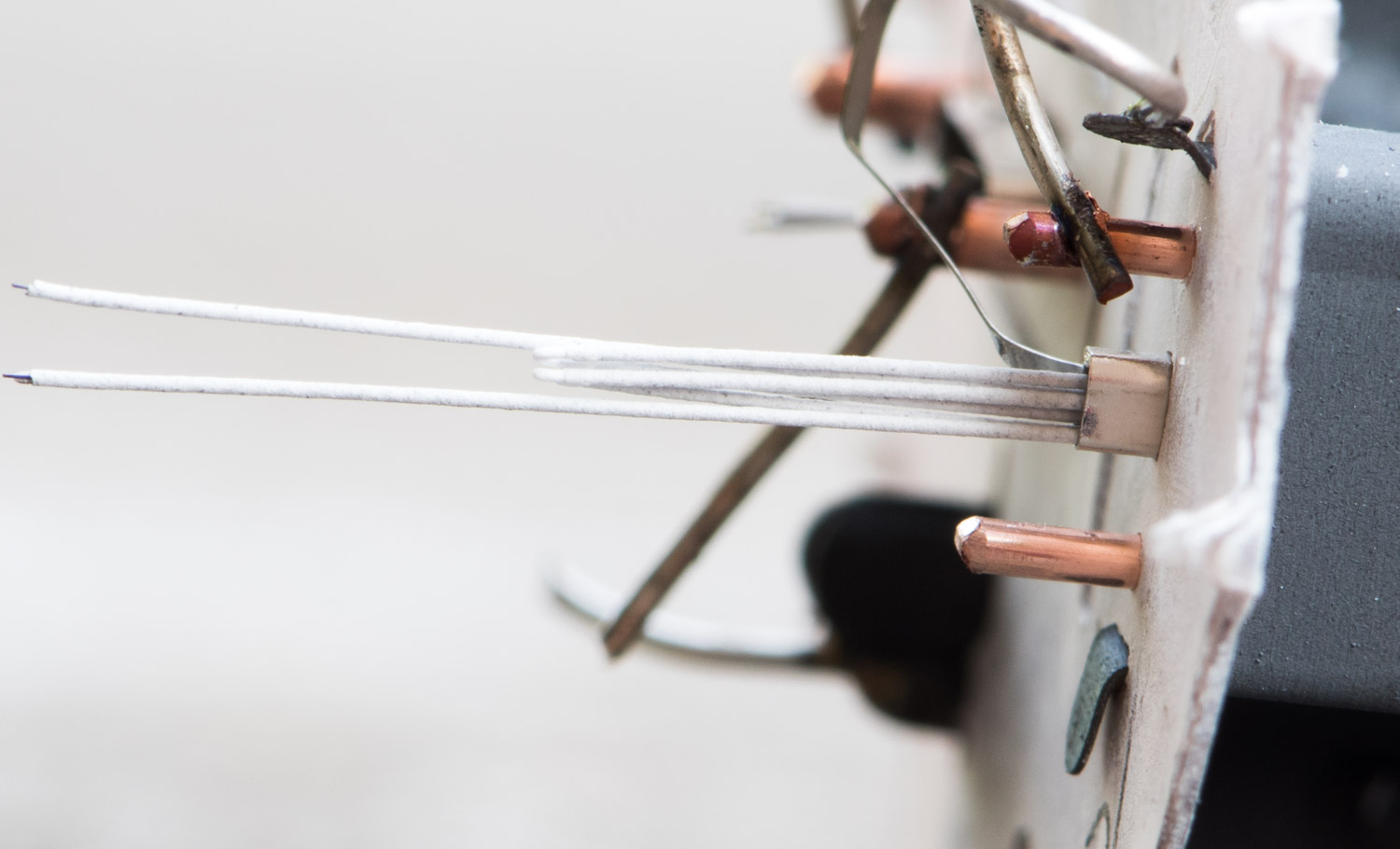
The heater wire of the low mu section:

The high mu triode removed from the rest:

The low mu triode, with the large plate for good cooling:

The two fins mounted on the rods provide cooling to the grid:

Grid and cathode of the high mu section:

Close up:

The low mu section has gold plated grid wire:


Tube manufacturing technology was very evolved when the Compactron series was introduced as these photos show.

A 6FM7 with the heaters lit up.

I hope you enjoyed the presentation of this tube. Stay tuned for many more tubes to be presented in the Tube of the Month series.
Best regards
Thomas


