
Hi!
This months tube is a transmitting beam power amplifier, the 1625.

The 1625 was designed for use as AF amplifier or modulator as well as for RF amplification. Except for the heater it is identical to the 807.


The data sheet also shows the triode connected curves:

Actual curves taken from a tube with the tracer:
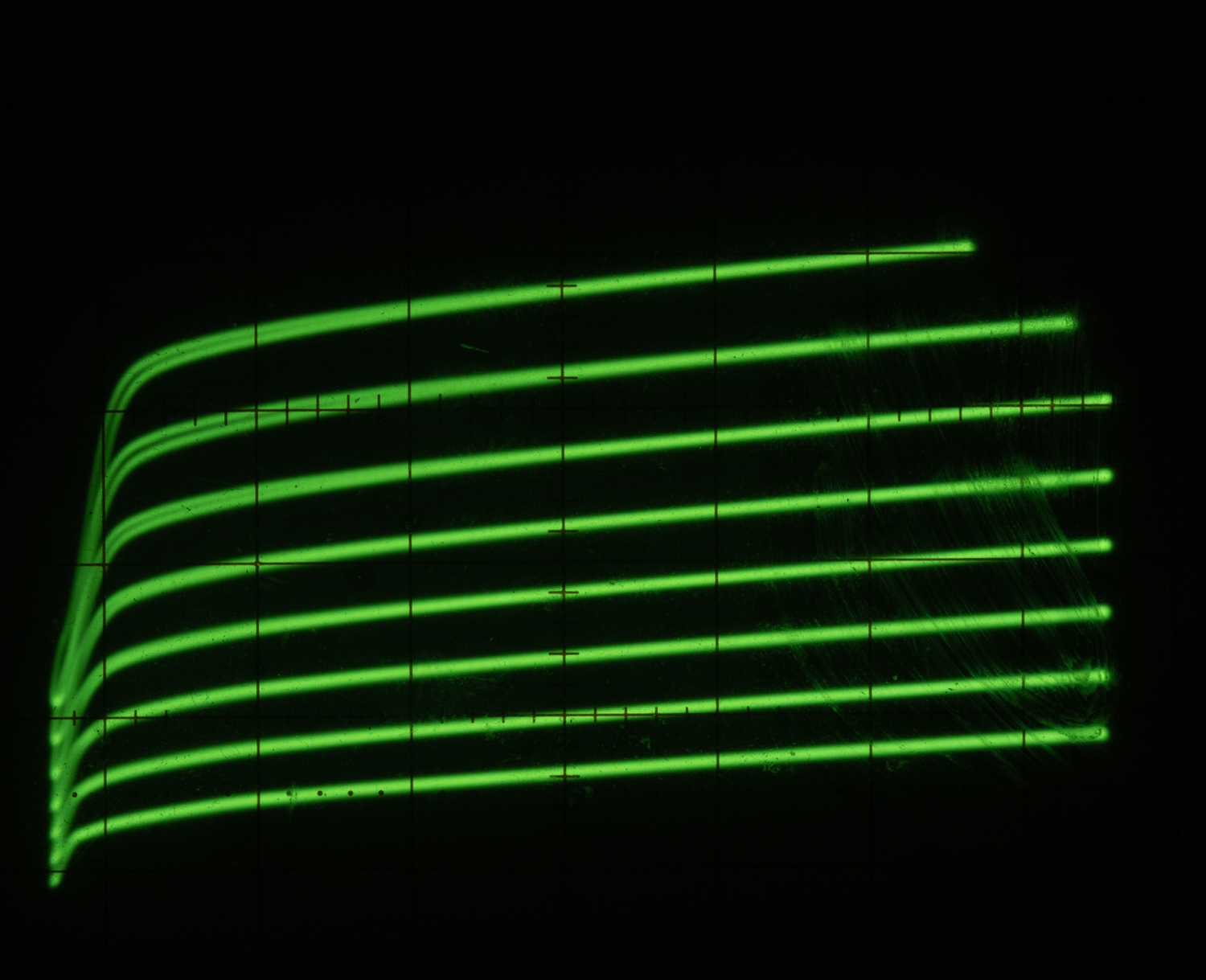

These don't look too shabby. Let's have e a look at the tube.

I have some RCA 1625 in the beautiful world map boxes:

Probably the most beautiful tube box ever made.

The tube is wrapped in protective cardboard inside:

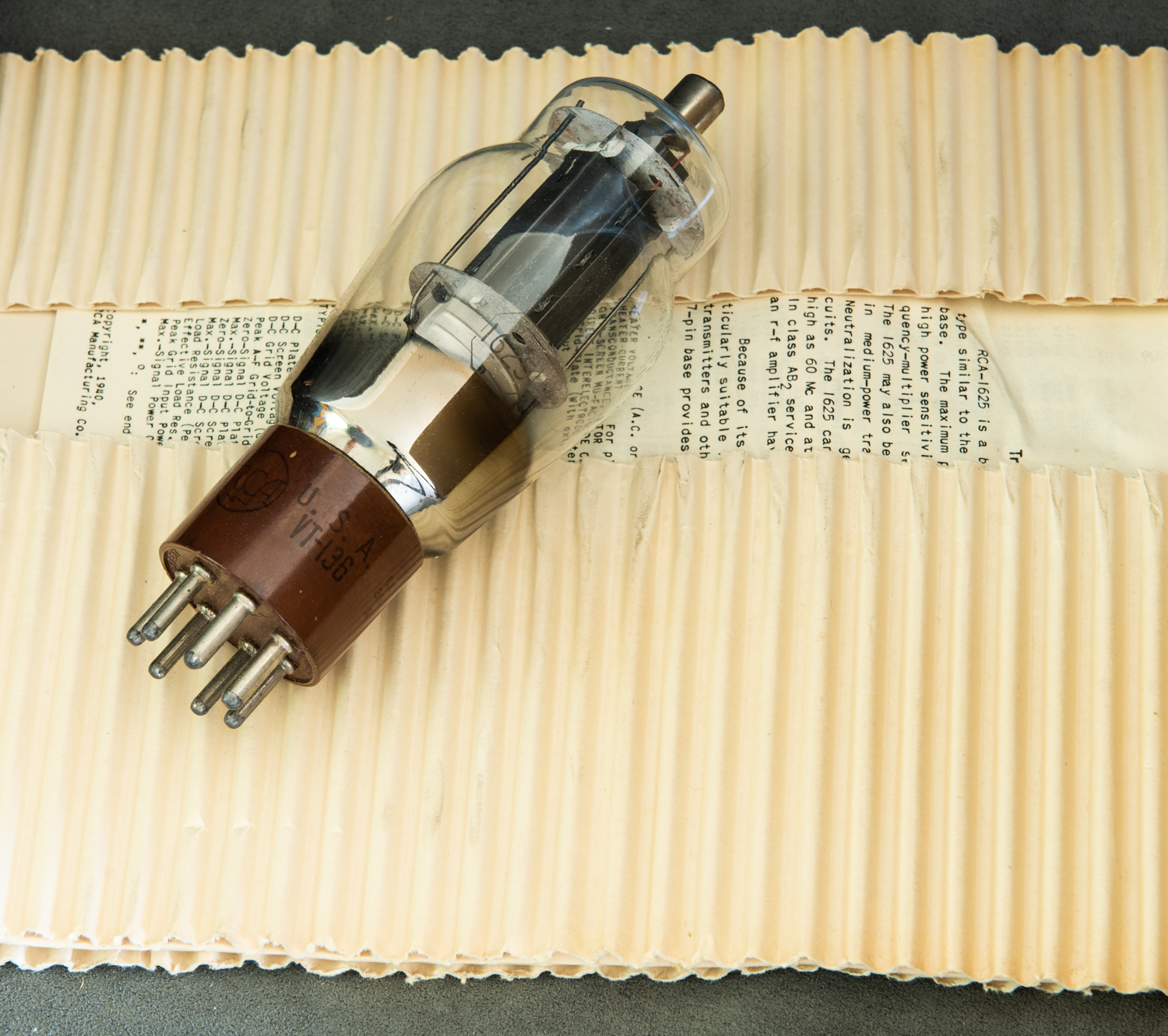
Inside the cardboard is some detailed documentation:


Some details of the tube:


More photos of a 1625:


The military designation is VT-136:

A National Union 1625:


The plate obstructs most of the glow when the tube is in operation:

On the bottom part of the grids is visible:

An interesting tube worth considering for an amplifier project if you don't mind the top cap.

Thomas


The 1625 sounds pretty good. I did a 816/6j5/1625
ReplyDeletehttps://www.itishifi.com/hifi/6va3kftp2ml3udonso5cblqklakzh9?rq=1625
Nice build.. I'm curious as to its sound. I have an 807 amp so I am curious about this as well.
ReplyDeleteIt's the same tube so would have the same exact 'sound'. I'm pretty sure filament voltage does not affect sound quality in any way.
Delete"I never built anything with these tubes, so cannot share any practical experience but I am sure these are some excellent amplification devices".
ReplyDeleteI designed a project that used the 807 with data from the _STC 807 Application Report_.
Vpp= 365V
V2K= 270V
Vgk= -22.5V
Ipq= 88mA (44mA/807)
I2q= 5mA (2.5mA/807)
Rl= 6K6 (P-2-P)
Po= 26.5W
THD= 1.8%
There are a couple of gotchas you need to look out for: this type likes to make snivets at the zero crossings that will require screen stoppers: 1.0K C-comp to prevent a damped oscillation at 60KHz.
The other gotcha is that the 807/1625 likes to make higher order harmonics. With the Twin-T test, the residual after nulling the fundamental looked like a sawtooth wave at 3X the fundamental frequency. That sounds nasty when running open loop. I took O. Schade's advise and provided 10% (~7.0dbv) local NFB. That reduced the nastiness and all that was needed was another ~7.0dbv of global NFB. After adjusting the gNFB to take the edge off, the project gave excellent sonic performance.