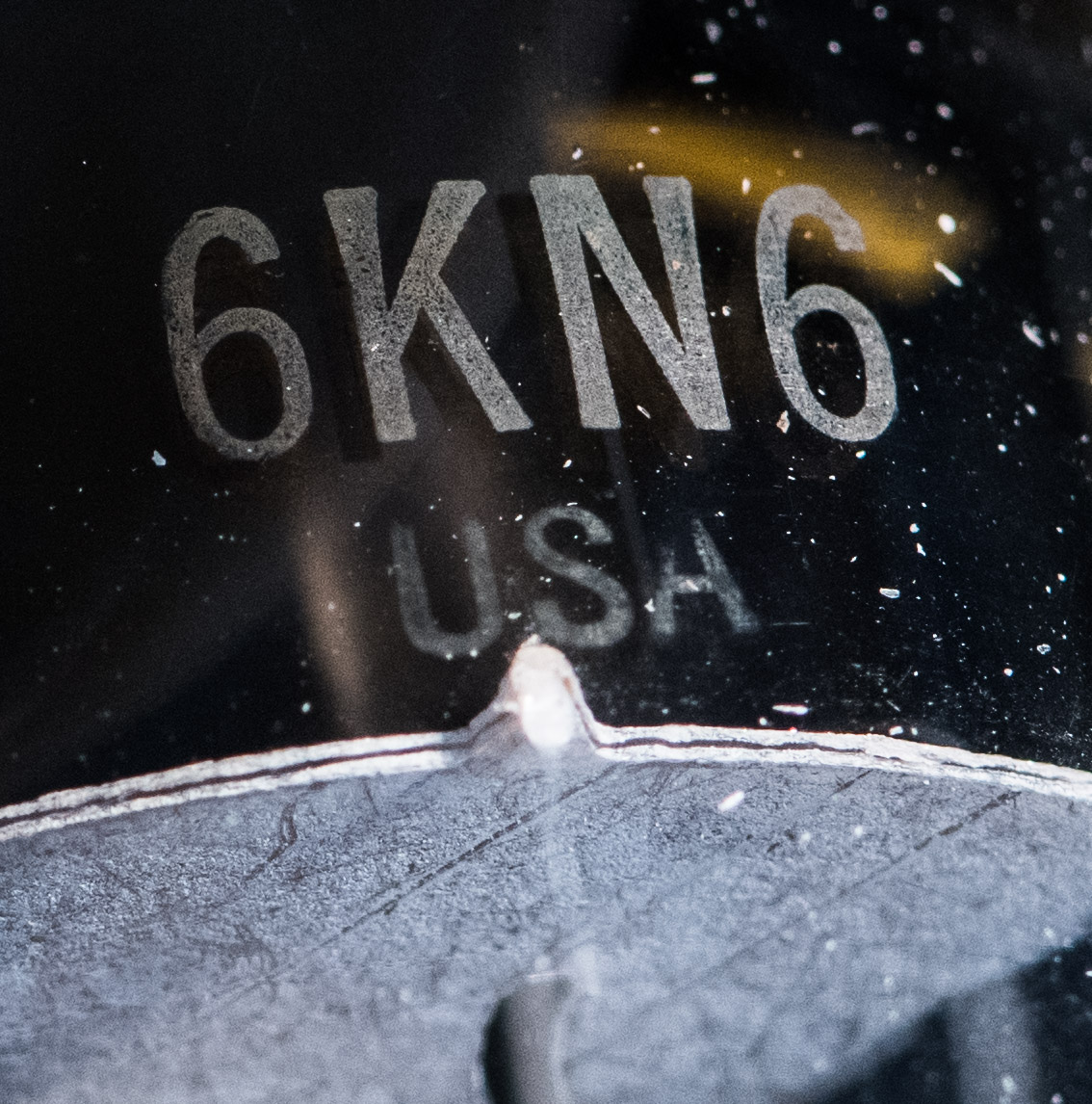
Although I am manufacturing my own directly heated triodes since the acquisition of the assets of ELROG, I still enjoy digging up unusual tubes which are well suited for audio purposes. With the 6CB5A and 6GE5 I already showed some sleeper tubes which work nicely triode wired as single ended output tube. Here is another tube of that category, the 6KN6.

The 6KN6 is a 12-pin Compactron tube. It was developed at the end of the era of tubes when that technology was matured and perfected. I have expressed my fondness of Compactrons in other tube of the month posts about such tubes, like the 6GE5, 6U10, 6AK10, 6BE3, 6FM7, 19DE3 and the marvellous 6HS5 and 6HV5A.
 The 6KN6 was developed as horizontal deflection amplifier tube for TV sets. It is a beam power pentode. The data sheet and pinout diagram indicate that it has two systems internally wired in parallel. But not all 6KN6 have such a structure. When it was introduced they probably started with two existing pentodes which they could fit into a compactron bottle. But later developed a new version which consists of a single pentode internally. At least most of my stock shows only a single system inside. The 6KN6 needs a hefty 3A of heater current which indicates a healthy emission capability. There is also a series heater version, the 42KN6. The data sheet gives a triode wired amplification factor of 4.5. I measured a very low triode plate impedance even lower than that of a 300B or 2A3. The max. plate dissipation is 30W. I am not afraid to run such TV tubes at their maximum plate dissipation as they proved to be rugged and long lasting. And replacements come rather cheap. So triode wired they can be expected to deliver up to 10W when pushed. Here are the triode plate curves:
This looks very promising and prompted me to start development of a single ended 6KN6 amplifier. More about that in upcoming posts. Let's look at some tubes.

Since General Electric introduced the Compactrons, it is appropriate to start with that manufacturer.

Like most of the higher powered deflection tubes the 6KN6 has the plate wired to a top cap to handle the large voltage spikes.

Some might be put off by the 12-pin base since the sockets can be a bit hard to find and the many pins require some substantial force to plug in the tubes.

On the close up photos some of the delicate engineering details are visible.


The construction is quite advanced and rugged.


Another General Electric 6KN6:


Next we have a RCA:


Here is a tube with a rather unusual feature:

The tube carries the Realistic Lifetime name which was a house brand of Radio Shack.

Gold plated pins on this one, and they had a green ring applied. It is some kind of coating which is applied inside the tube. Probably to cover the ring of black deposit which used to develop in such tubes over some time of use.

Westinghouse:

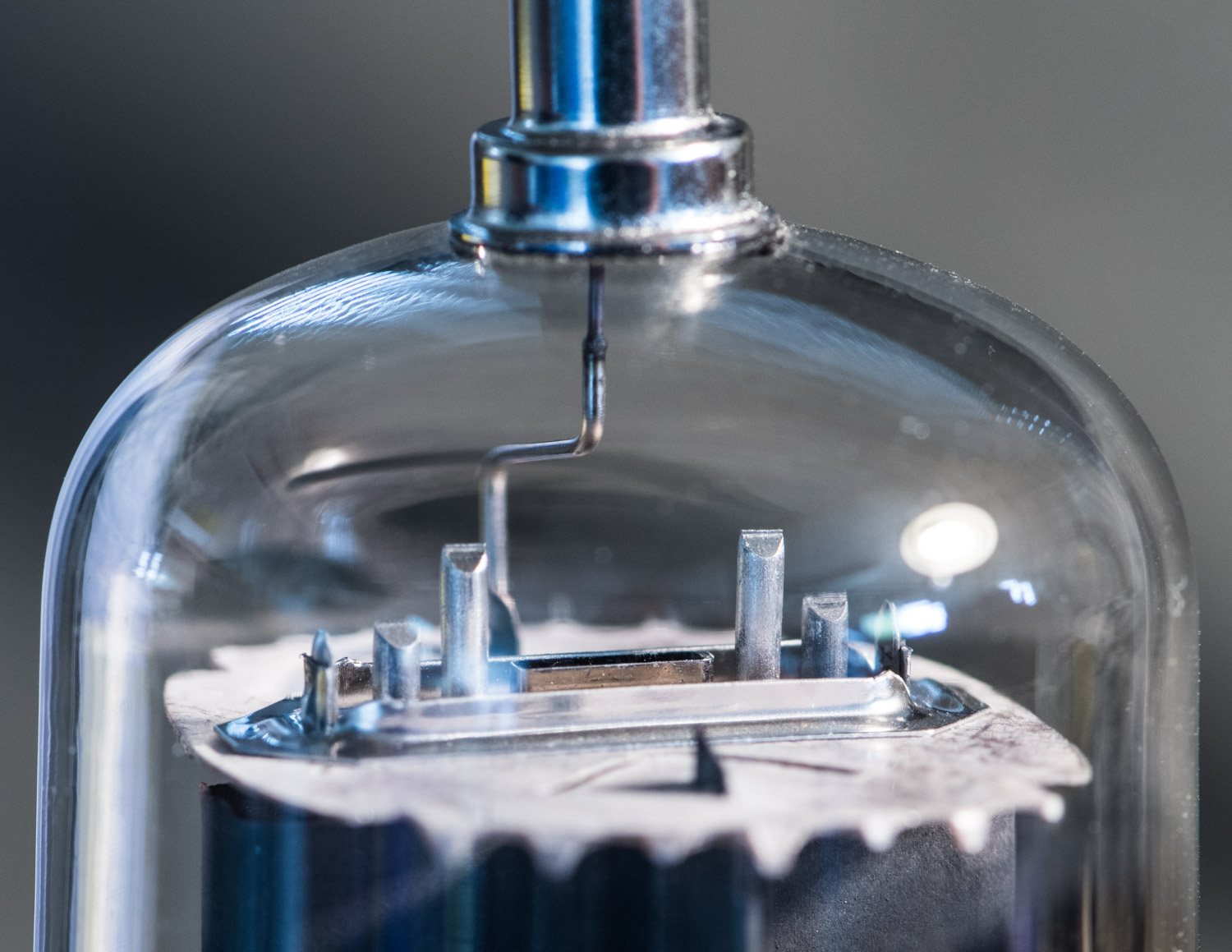


Sylvania:


Next we have a sample which has two internal systems, it is Zenith branded:


Canadian General Electric:


Next we have two different Raytheon tubes.


This one also has two systems wired in parallel.


The other has a single pentode inside:


Now let's cut this one open to see the construction more in detail:


The massive heater:


The plate:


Quite unusual structure with some additional fins.


Cathode with grids and beam plate:

The screen and control grids are extremely well aligned:

Only when viewed from an angle the gold plated control grid is visible underneath the coated screen grid.


These photos show how far tube manufacturing was advanced in the 1960s.


The beam plate removed:


Revealing cathode and the 2 grids:


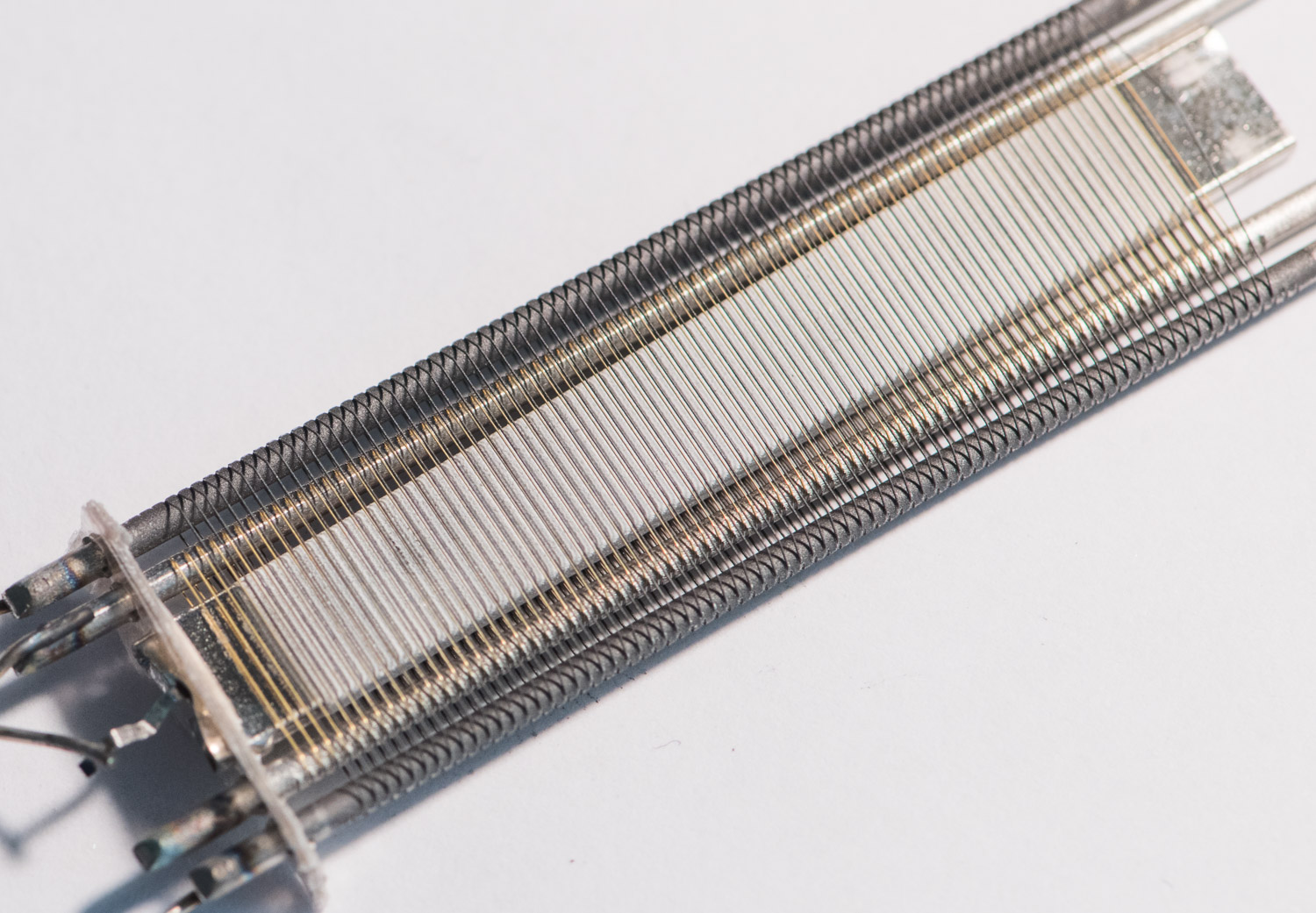

Separating the screen grid:


Cathode pulled out:


And now a 6KN6 in operation:


As mentioned above, development of a 6KN6 amplifier is underway. The metal plates are already made.

The top plate, connection plate and support plate which carries the internally mounted parts. Stay tuned!
Best regards
Thomas